Addressing wedding invitations feels like a small job until you reach the fourth household and are not sure who is invited. The way you address an invitation does more than get it delivered: it tells each guest exactly who the invitation is for. Get it right and nobody has to ask whether the kids are coming or whether they can bring a date.
This guide covers where the names go, how to address wedding invitations for every common case, with formal and relaxed examples, and how the same rules work on a digital invitation, where there is no envelope at all.
Where the names go
On a paper invitation, the guest's name goes on the envelope, not on the card. The card says who is hosting and what the event is; the envelope says who is invited.
Traditional invitations used two envelopes. The outer envelope carried the full formal names and the postal address. The inner envelope, which had no address, used a shorter form and listed everyone invited, including children. Many couples now use a single envelope, and that works fine: write the names as you would on the inner envelope, and add the address.
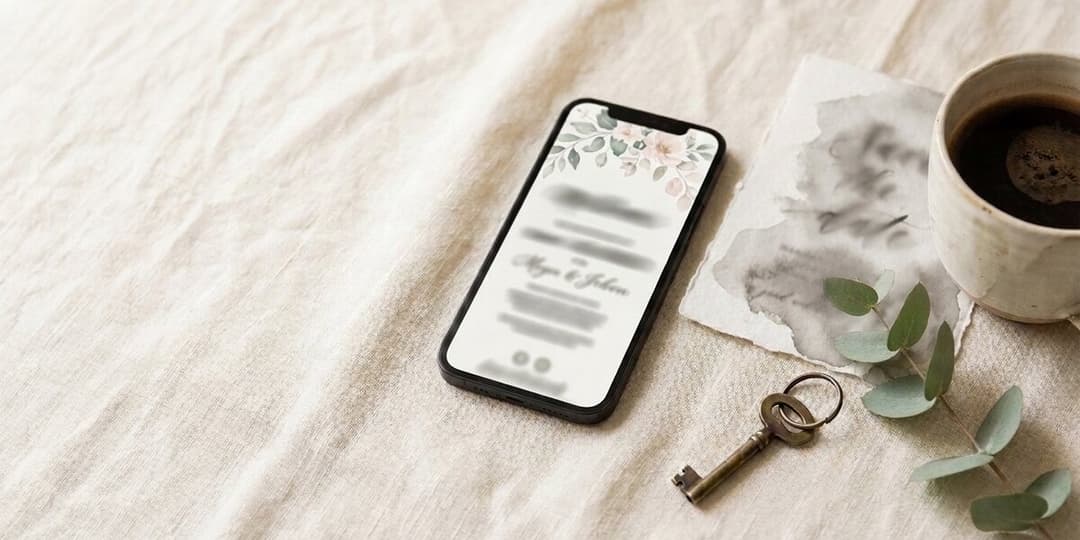
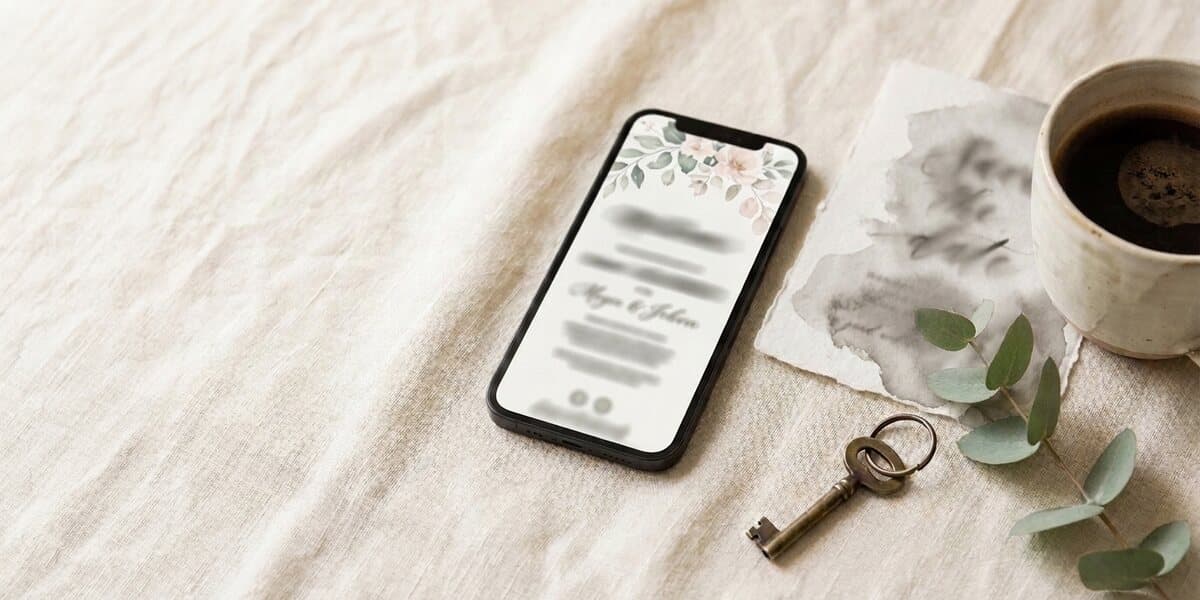
A digital invitation has no envelope, so the name moves into the greeting itself, as in "Dear The Smith Family". More on that below.
How to address wedding invitations: quick examples
| Who you are inviting | Formal | Relaxed |
|---|---|---|
| A single guest | Mr. Daniel Lee | Daniel Lee |
| A married couple with one surname | Mr. and Mrs. James Smith | James and Laura Smith |
| A married couple with different surnames | Ms. Laura Chen and Mr. James Smith | Laura Chen and James Smith |
| An unmarried couple who live together | Each name on its own line | Laura and James |
| A family with children | The Smith Family, or the parents first, then the children by name | The Smith Family |
| A guest with a plus-one | Mr. Daniel Lee and Guest | Daniel and Guest, or Daniel and their partner's name |
| A guest with a professional title | Dr. Laura Chen | Laura Chen |
How to address wedding invitations to a couple
For a married couple who share a surname, the traditional form is "Mr. and Mrs. James Smith"; the modern form is "James and Laura Smith" or "Mr. James and Mrs. Laura Smith". If the couple uses different surnames, write both full names joined by "and", putting first the person you know better, or going alphabetically if you know them equally.
An unmarried couple who live at the same address share one invitation, with each name on its own line. A couple who live apart each get their own invitation.
How to address wedding invitations to a family
"The Smith Family" invites everyone in the household, children included. If you want to be specific, write the parents on the first line and the children by first name below them, oldest first.
If children are not invited, address the invitation to the parents only, and say it kindly somewhere else, such as on your wedding website. Writing "no children" on the envelope is still considered blunt.
Adult children who live at home traditionally receive their own invitation, or at least their own line, rather than being folded into "and family".
How to address wedding invitations with a plus-one
If you know the partner's name, use it: "Daniel Lee and Maya Patel". It feels warmer and tells the guest you know who is coming. If you do not know it, "Mr. Daniel Lee and Guest" is the standard form. If a guest is not invited with a plus-one, write only their name.
Titles and special cases
- Doctors keep their title: "Dr. Laura Chen and Mr. James Smith", or "The Doctors Smith" when both are doctors.
- Use the names your guests use. If your aunt has gone by her maiden name for thirty years, write that.
- Spell out "and" on formal invitations. An ampersand is fine on relaxed ones, as long as every envelope matches.
Writing the names neatly
- Use one pen and one colour of ink for every envelope.
- Handwriting is expected for formal invitations. If yours is shaky, a friend with neat handwriting or a calligrapher can help; printed labels are fine for relaxed invitations.
- Check names with diacritics, such as Nguyễn or Zoë, before you write them. A wrong letter in a name is the mistake guests notice most.
- Keep one guest list with each household's names exactly as you want them written. You will reuse it for place cards, the seating chart and thank-you notes.
How to address digital wedding invitations
On a digital invitation, the greeting does the envelope's job. The best way to do it is one link per guest or household, not one link for the whole group chat, so each invitation can open with the right name.
On Wedflip, every guest on your list gets a personal link. The "Name on the invitation" field holds exactly the words you would write on an envelope, such as The Smith Family or Aunt Mary, and the invitation opens with "Dear The Smith Family". The name also appears in the link preview in WhatsApp and other chat apps, and when the guest RSVPs, the reply is saved against their name. See how personalized wedding invitations with guest names work, or browse digital wedding invitations.
The same rules apply as on paper:
- Address each household the way you would on the envelope.
- If children are invited, say so in the name (The Smith Family) or list them.
- For a plus-one, use their name if you know it.
- Send one link per household, so a forwarded link does not end up answering for someone else.
A quick checklist
- Decide who in each household is invited.
- Write each household's name the way it should appear, in one list.
- Check spellings, titles and diacritics.
- Choose formal or relaxed and use it on every invitation.
- For paper, address the envelopes; for digital, put the same names in each guest's invitation.
- Plan when to send them with the wedding invitation timeline calculator.
FAQ
How do you address wedding invitations to a family?
"The Smith Family" invites everyone in the household. To be specific, write the parents first and then the children by first name.
How do you address a wedding invitation with a plus-one?
Use the guest's name followed by "and Guest", or the partner's name if you know it.
How do you address wedding invitations to a married couple?
Formally, "Mr. and Mrs. James Smith"; in a relaxed style, "James and Laura Smith". With different surnames, write both full names joined by "and".
Do you write guest names on the wedding invitation itself?
Usually not on a paper card: the names go on the envelope. On a digital invitation, the name goes in the greeting, so each guest's invitation opens with their name.