A wedding day runs on two clocks: the one on your wrist, and the one in your vendors' heads. The clock on your wrist says "I'm having the best day of my life." The clock in your vendors' heads says "we have 23 minutes to flip the ceremony space into the reception space and the photographer is about to miss the golden hour."
The timeline is the document that reconciles these two clocks. Done well, it makes the day feel effortless. Done badly, it makes the day feel rushed and the wedding party feel like they're running a marathon.
This is the 2026 hour-by-hour timeline — the schedule that 87% of US couples with a full wedding planner use, and the one that the other 13% wish they'd had when the day went sideways.
The 2026 wedding day structure
The traditional US wedding day in 2026 runs about 10-12 hours, with two distinct arcs:
Arc 1: The formal arc (8 hours). Getting ready → first look → ceremony → cocktail hour → reception → dinner → dancing → cake → send-off. This is the part guests see.
Arc 2: The vendor arc (12+ hours). Vendor arrivals at 8am, setup from 9am-4pm, ceremony at 5pm, reception from 6pm-midnight, breakdown until 2am. The photographer is the last to leave. The caterer is the first to arrive (often 6am for prep).
The timeline you'll see on your wedding website is the formal arc. The timeline your wedding coordinator works from is the vendor arc. Both are critical. This guide covers both.
The standard 2026 timeline (5pm ceremony, 11pm send-off)
This is the most common 2026 US wedding structure. It works for spring, summer, and fall weddings. Winter weddings shift earlier (4pm ceremony) for daylight.
8:00 AM — Vendor arrivals begin
The caterer's prep team arrives with the rental company. They unload the kitchen setup, the bar, the tables, the chairs, the linens. For a 150-guest wedding, this is a 4-6 person crew with a box truck.
Your wedding coordinator (or the venue's event manager) arrives to oversee the setup. The photographer's second shooter arrives to scout locations and lighting.
You don't see any of this. You're at the hotel, the bridal suite, or your house, sleeping in or having breakfast.
10:00 AM — Hair and makeup begins
Your hair and makeup team arrives at your getting-ready location. A standard bridal party of 6-8 needs about 4-5 hours of hair and makeup. If you have a larger party (10+), this extends to 6-7 hours.
The 2026 standard: hair first (each person 45-60 minutes), then makeup (30-45 minutes per person), with the bride last. The bride's hair takes 60-90 minutes; the bride's makeup takes 60-75 minutes.
The photographer arrives at 11:00 AM to capture the getting-ready process. They shoot detail shots (the dress, the rings, the invitations) for 30 minutes before starting portraits.
12:00 PM — Bridal portraits
After hair and makeup, the photographer shoots bridal portraits. These are the "wedding day hero shots" — the dress, the veil, the bouquet, the shoes, the jewelry. Plan for 30-45 minutes.
While the photographer is shooting, your wedding party finishes getting ready. The groom and groomsmen usually start getting ready around 11:00 AM and finish by 1:00 PM.
1:00 PM — Wedding party portraits
The photographer now shoots wedding party portraits — the bride with each bridesmaid, the groom with each groomsman, the couple with each pair, the full wedding party together. Plan for 60-90 minutes.
This is also when the first look (if you're doing one) happens. A "first look" is when the couple sees each other privately before the ceremony, typically in a private spot at the venue. It allows for portraits without the ceremony timeline pressure. About 60% of 2026 US couples do a first look.
If you're not doing a first look, the couple's portraits happen during cocktail hour.
2:30 PM — Final touches and lunch
By 2:30 PM, the photographer's main work is done. The wedding party changes into reception outfits (or stays in ceremony outfits if you're doing a single-look wedding). Everyone eats — this is a working lunch, not a leisurely meal. Sandwiches or pizza for the wedding party is standard.
The couple uses this time to rest, review the timeline, and check in with the wedding coordinator.
3:30 PM — Vendor setup complete
The ceremony space is set. The reception space is set. The florist has done the final touches. The band or DJ has sound-checked. The caterer has prepped the kitchen. The cake has been delivered. The wedding coordinator does a final walkthrough.
4:00 PM — Guest arrivals begin
Guests start arriving for the ceremony. Most 2026 US weddings have a 30-minute window between guest arrival and ceremony start. The greeters (usually 2-4 people from the wedding party) direct guests to their seats.
The venue's ceremony space typically has a "guest book table" or "welcome table" with the wedding programs, the guest book, and any take-home favors (candles, matches, custom cards).
4:30 PM — Ceremony
The standard 2026 US wedding ceremony is 20-30 minutes:
- Processional (3-5 minutes): wedding party enters, then the couple
- Welcome / opening remarks (1-2 minutes): from the officiant
- Readings (2-3 minutes): usually 1-2 readings from family or friends
- Vows (3-5 minutes): the couple exchanges vows
- Ring exchange (1-2 minutes)
- Pronouncement (1 minute): "I now pronounce you..."
- Recessional (2-3 minutes): couple exits, wedding party follows
- Post-ceremony congratulations (5-10 minutes): guests hug the couple outside
5:00 PM — Cocktail hour
After the ceremony, guests move to the cocktail hour space (often a separate room, a patio, or a designated section of the venue). The cocktail hour is 60-90 minutes in 2026.
During this time:
- The photographer shoots couple portraits (if no first look was done)
- The wedding party joins the cocktail hour
- The caterer flips the ceremony space to the reception space
- Guests drink, eat hors d'oeuvres, and mingle
The signature cocktail is the 2026 standard — a custom drink named after the couple. Two cocktails is the typical count: one spirit-forward, one wine/beer-friendly.
6:00 PM — Reception grand entrance
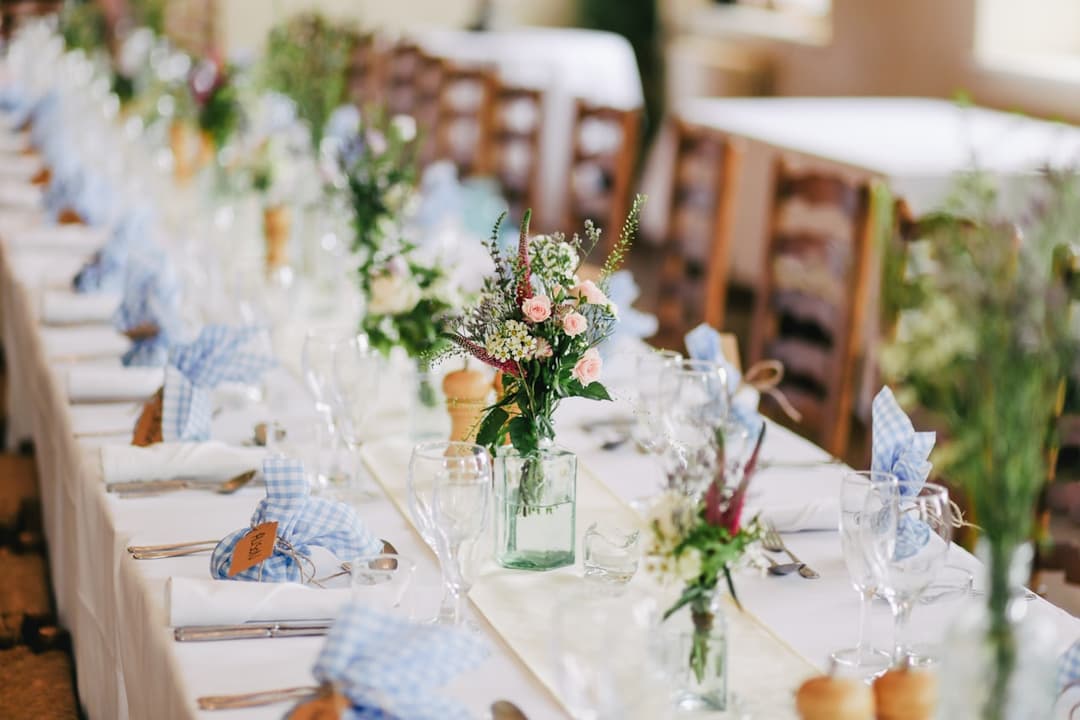
The wedding coordinator gathers guests in the reception space. The wedding party enters in pairs (bridesmaids with groomsmen, in order of importance), then the couple enters last.
The grand entrance is loud, fun, and short — typically 3-5 minutes total. The DJ or MC announces each pair. Music plays during the entrance. The couple enters to their song.
6:15 PM — First dance and parent dances
Immediately after the entrance, the couple has their first dance. The song is 2-3 minutes. The dance is choreographed or improvised, depending on the couple.
After the first dance, the parent dances. The standard 2026 order:
- Bride and father (2-3 minutes)
- Groom and mother (2-3 minutes)
- Optional: bride and stepfather, groom and stepmother, or other combinations for blended families
If the parents are divorced, decide in advance which parent dances with the couple member, and when. The wedding coordinator manages this.
6:30 PM — Dinner service
Dinner is served. The 2026 standard is plated dinner (each guest gets a pre-set plate) or family-style (large platters on each table for sharing). Buffet is less common in 2026 — it creates lines and slows the timeline.
Dinner takes 45-60 minutes. The first course (salad or soup) is served quickly. The main course (usually chicken, beef, or fish) is the bulk of the time. Dessert is later (with the cake cutting).
During dinner, the photographer shoots detail shots (the table, the food, the guests). The wedding coordinator checks in with the couple, the parents, and the wedding party.
7:15 PM — Toasts
Toasts happen after dinner, before dancing. The standard 2026 order:
- Best man (3-5 minutes)
- Maid of honor (3-5 minutes)
- Optional: father of the bride, groom, or other family members
Toasts can be emotional, funny, or both. The 2026 trend: shorter, more heartfelt, less embarrassing. Aim for 3-4 minutes each. Keep it under 5.
7:30 PM — Cake cutting
After toasts, the couple cuts the cake. The cake cutting is brief (2-3 minutes) and is mostly for photos. The cake is then sliced by the caterer and served (or set out on a dessert table for self-service).
The 2026 trend: smaller "cutting cake" (just for the photo) plus a separate dessert table with multiple options (the wedding cake, a groom's cake, cookies, cupcakes, or a dessert bar).
7:45 PM — Open dancing
The DJ or band opens the floor. The couple dances first, then the wedding party joins, then the guests. Within 5-10 minutes, the dance floor should be full.
The open dance period runs 2-3 hours. The DJ or band plays a mix: oldies for the older guests, current hits for the younger guests, and the couple's must-plays.
9:00 PM — Late-night snacks (optional)
About 40% of 2026 US weddings serve late-night snacks at this point. The options: pizza, sliders, French fries, tacos, popcorn. The food is casual, served buffet-style, and gives guests a boost after drinking for 3 hours.
10:30 PM — Last dance
The DJ or band plays a "last song" — usually a slow, romantic song. The couple and all the guests who are still on the dance floor gather for the last dance. This is a 2026 trend that captures great photos and ends the night on a high.
11:00 PM — Send-off
The couple exits to a send-off: sparklers, bubbles, flower petals, or just a hug goodbye. The send-off is brief (2-3 minutes) and the couple heads to their hotel or after-party.
For the 60% of 2026 US couples who don't have a send-off, the reception just ends and guests leave when they want to. The venue's alcohol service ends at 11 PM (most US states have last-call laws that determine this). The music ends at 11:15 PM. Guests trickle out over the next 30-60 minutes.
11:00 PM - 2:00 AM — Vendor breakdown
The caterer's team breaks down the kitchen, the bar, and the buffet. The rental company comes to pick up the tables, chairs, and linens. The venue's cleaning crew takes over. The photographer delivers the sneak peek photos within 24-48 hours.
The couple is asleep by midnight (or at the after-party, but the wedding day is essentially over by 1 AM for everyone except the vendors).
The alternative timelines
Not every wedding fits the 5pm ceremony structure. Here are the common alternatives.
The 4pm ceremony timeline (winter weddings)
The winter timeline shifts everything 1 hour earlier:
- 3:00 PM: Guest arrivals
- 4:00 PM: Ceremony (still 20-30 minutes)
- 4:30 PM: Cocktail hour
- 5:30 PM: Reception entrance
- 5:45 PM: First dance
- 6:00 PM: Dinner
- 7:00 PM: Toasts
- 7:15 PM: Cake
- 7:30 PM: Dancing
- 10:00 PM: Last dance
- 10:30 PM: Send-off
This works because the sun sets earlier in winter, so the photographer has less daylight for portraits.
The 6pm ceremony timeline (saturday evening weddings)
The 6pm ceremony timeline shifts everything 1 hour later:
- 5:00 PM: Guest arrivals
- 6:00 PM: Ceremony
- 6:30 PM: Cocktail hour
- 7:30 PM: Reception entrance
- 7:45 PM: First dance
- 8:00 PM: Dinner
- 9:00 PM: Toasts
- 9:15 PM: Cake
- 9:30 PM: Dancing
- 11:30 PM: Last dance
- 12:00 AM: Send-off
This is the "late-night" wedding and is increasingly common in 2026, especially for couples who want a more adult, evening-focused atmosphere. The downside: the photographer has less daylight, the after-party needs a late-license venue, and the older guests may leave early.
The morning wedding timeline
About 5% of 2026 US weddings are morning weddings (11 AM ceremony, 2 PM end). These are typically:
- Destination weddings (to leave time for afternoon activities)
- Brunch weddings (with mimosas and breakfast food)
- Religious ceremonies that have to happen in the morning
- Court weddings (followed by a small celebration)
The morning timeline:
- 9:00 AM: Hair and makeup
- 10:00 AM: Getting ready
- 10:30 AM: Guest arrivals
- 11:00 AM: Ceremony
- 11:30 AM: Cocktail hour (with brunch food)
- 12:30 PM: Reception (with seated brunch)
- 1:30 PM: First dance and toasts
- 2:00 PM: Send-off
The morning timeline is the shortest and most cost-effective option, but the photos are daytime (less romantic), the food is brunch (not what guests expect at a wedding), and the alcohol service is limited (mimosas, not champagne toasts).
How to build your custom timeline
Use the standard 2026 timeline as a starting point. Then customize for your specific situation.
Step 1: Pick your ceremony time
The most common 2026 ceremony times:
- 4:00 PM (winter, sunset, formal)
- 4:30 PM (winter, formal)
- 5:00 PM (year-round, the standard)
- 5:30 PM (summer, golden hour portraits)
- 6:00 PM (summer, evening)
Pick a time that matches your season and your photography style. Talk to your photographer — they have strong opinions on light.
Step 2: Work backwards from the ceremony
The ceremony time is the anchor. Everything else flows from it.
For a 5:00 PM ceremony:
- 4:00 PM: Guest arrivals (1 hour before)
- 3:30 PM: Vendor setup complete
- 1:00 PM: Wedding party portraits
- 12:00 PM: Bridal portraits
- 10:00 AM: Hair and makeup
For a 4:00 PM ceremony, shift everything 1 hour earlier.
For a 6:00 PM ceremony, shift everything 1 hour later.
Step 3: Customize the reception timeline
The reception timeline is more flexible than the ceremony. You can:
- Shorten cocktail hour to 45 minutes
- Skip the late-night snacks
- Extend the dancing to midnight
- Add a second outfit change
- Skip the cake cutting (most guests don't care)
The key constraint: don't shorten dinner below 45 minutes. Guests need time to eat, drink, and have a conversation. A 30-minute dinner feels rushed.
Step 4: Add buffer time
Add 15-30 minutes of buffer between major events. The ceremony runs over. The hair and makeup takes longer than expected. The photographer needs extra time for the family photos. The catering setup hits a snag.
Buffer is not wasted time. Buffer is what makes the day feel relaxed.
Step 5: Share with vendors
Send the timeline to every vendor at least 2 weeks before the wedding. Ask them to confirm the timing. The wedding coordinator is the final authority — if the photographer and the wedding coordinator disagree, the coordinator wins.
Step 6: Share with the wedding party
Send the timeline to the wedding party 1 week before. They need to know:
- When to be ready
- When to be at the ceremony
- When to be at the reception
- When the photos are
- When they can eat (the wedding party usually eats first, before the guests)
The wedding party doesn't need to know every detail. Just the major events.
Common timeline mistakes to avoid
Mistake 1: Not enough time for hair and makeup
The 2026 standard is 4-5 hours for a bridal party of 6-8. If you have a larger party, you need 6-7 hours. Starting too late means the bride is still in makeup when the photographer arrives.
Mistake 2: Too much time between ceremony and reception
The gap between ceremony end and reception start is the most dangerous part of the timeline. If it's 90+ minutes, guests start drinking at the cocktail hour and are less engaged at the reception. Keep it to 60-90 minutes.
Mistake 3: Skipping buffer time
Every minute of buffer you add is a minute of stress you don't experience. The 2026 standard is 15-30 minutes of buffer between major events. The "perfect" timeline is the one that handles the unexpected.
Mistake 4: Not having a wedding coordinator
The wedding coordinator is the only person who knows the entire timeline. Without one, the photographer is making timing decisions, the caterer is making timing decisions, and the couple is confused. In 2026, about 70% of US couples have a wedding coordinator. The other 30% should strongly consider one.
Mistake 5: Forgetting the photographer's perspective
The photographer needs 30-60 minutes for couple portraits after the ceremony. The cocktail hour is the typical time for this. If the cocktail hour is too short or the couple is pulled into other activities, the photographer doesn't get the portraits.
Mistake 6: Starting the timeline before the vendor contracts are signed
Lock the vendors first, then build the timeline. If you build the timeline before hiring the photographer, you might end up with timing that doesn't match the photographer's package (which usually includes 6-8 hours of coverage starting at the getting-ready).
The bottom line
The 2026 wedding day timeline is a 10-12 hour coordinated dance between your vendors, your wedding party, and your guests. The standard timeline works for 80% of US couples. The other 20% need customization (winter timeline, late-night timeline, morning timeline, multi-day wedding timeline).
The workflow is the same: pick your ceremony time, work backwards, customize the reception, add buffer, share with vendors, share with the wedding party. Have a wedding coordinator manage the day-of. The standard 5:00 PM ceremony → 11:00 PM send-off is the right default for most 2026 couples.